
About
Home » Civil Engineering
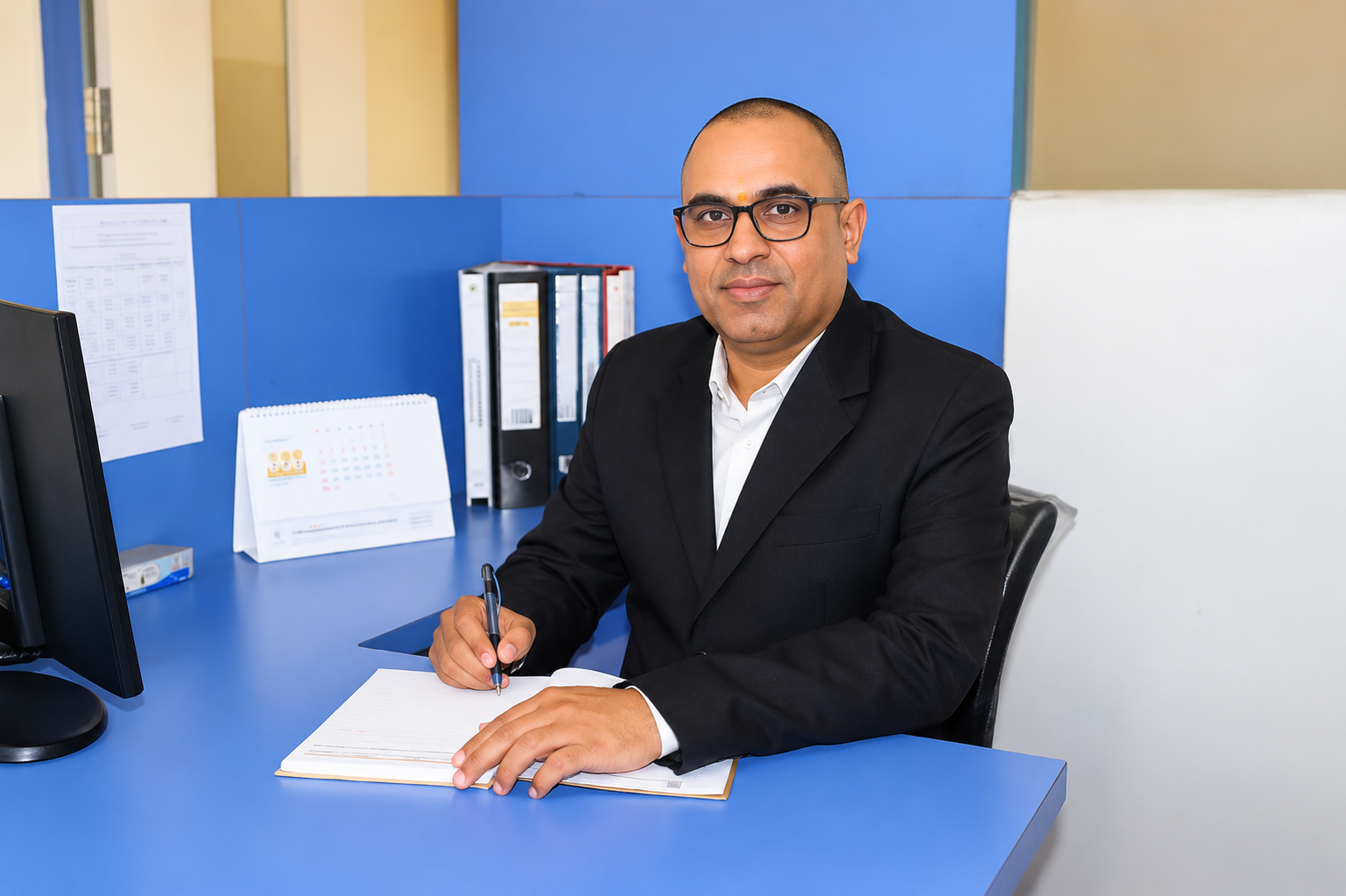
Dr. Atul Khatri
Head of the Department
Welcome to the Department of Civil Engineering
Marathwada Mitra Mandal’s Institute of Technology, Pune
Civil Engineering is one of the core branches of engineering, encompassing planning, designing, structural development, construction, and project management. Established in 2019, the Department of Civil Engineering at MMIT has been one of the fastest-growing departments, providing a platform to promote student and faculty achievements along with various academic and professional activities.
The department is guided by highly qualified and experienced faculty members who are dedicated to academic excellence, research, and professional ethics. It is supported by modern infrastructure and state-of-the-art laboratories, including those for Concrete Technology, Fluid Mechanics, Environmental Engineering, Geotechnical Engineering, Engineering Geology, Surveying, Strength of Materials, Transportation Engineering, and Civil CADD. These facilities, equipped with advanced instruments, foster both quality education and innovative research.
To strengthen industry-academia collaboration, the department has signed Memoranda of Understanding (MoUs) with reputed industries, providing students with practical exposure and enhanced technical skills. Students are also encouraged and guided to pursue competitive examinations such as UPSC, MPSC, and IES. In addition, graduates can register with various public sector organizations to practice as consultants or contractors.
The department also ensures excellent placement opportunities for its students in reputed construction and infrastructure companies such as Larsen & Toubro (L&T), Shapoorji Pallonji, Ultratech Ltd., TATA Projects, Afcons Infrastructure, Hindustan Construction Company (HCC), JMC Projects, and NCC Limited. The consistent placement record reflects the department’s strong industry linkages and its commitment to preparing students for successful professional careers.
The Department of Civil Engineering at MMIT remains committed to nurturing competent professionals with strong technical expertise, ethical values, and a vision to contribute meaningfully to sustainable development and nation-building.
VISION
“To be a leading Civil Engineering department,
shaping techno-socially competent engineers for
sustainable development and nation building”
MISSION
- Imparting quality education in Civil Engineering through effective teaching–learning processes and modern tools
- Nurturing techno-social competence among students through skill development, sustainable practices, and community engagement
- Inculcating professional ethics, leadership skills, and preparing graduates to work in diversified domains of public and private sector
Program Educational Objectives: (PEOs)
-
Engineering Graduates will be able to:
PEO 1: Graduates will apply fundamental and advanced Civil Engineering knowledge using modern tools for analysis, design, and development of infrastructure systems -
PEO 2: Graduates will demonstrate techno-social competence by addressing engineering problems with sustainable, ethical, and societal considerations -
PEO 3: Graduates will pursue successful careers in public and private sectors, higher education, or entrepreneurship, demonstrating leadership and lifelong learning
Program Outcomes (POs)
-
PO1 – Engineering Knowledge: Students will be able to apply knowledge of mathematics, natural science, computing, engineering fundamentals, and engineering specialization to develop solutions for complex engineering problems. -
PO2 – Problem Analysis: Students will be able to identify, formulate, review research literature, and analyze complex engineering problems to reach substantiated conclusions with consideration for sustainable development. -
PO3 – Design/Development of Solutions: Students will be able to design creative solutions for complex engineering problems and develop systems, components, or processes considering public health, safety, society, culture, environment, and sustainability. -
PO4 – Conduct Investigations of Complex Problems: Students will be able to conduct investigations of complex engineering problems using research-based knowledge, experiments, modelling, analysis, and interpretation of data to provide valid conclusions. -
PO5 – Engineering Tool Usage: Students will be able to create, select, and apply appropriate techniques, resources, and modern engineering and IT tools, including prediction and modelling, while understanding their limitations. -
PO6 – The Engineer and The World: Students will be able to analyze and evaluate societal, environmental, economic, health, safety, legal, and cultural aspects while solving complex engineering problems for sustainable development. -
PO7 – Ethics: Students will be able to apply ethical principles, professional ethics, human values, diversity, inclusion, and adhere to national and international laws in engineering practice. -
PO8 – Individual and Collaborative Team Work: Students will be able to function effectively as an individual and as a member or leader in diverse and multidisciplinary teams. -
PO9 – Communication: Students will be able to communicate effectively and inclusively with the engineering community and society through reports, design documentation, and effective presentations considering cultural and language differences. -
PO10 – Project Management and Finance: Students will be able to apply engineering management principles and economic decision-making in individual work, teamwork, and multidisciplinary project management. -
PO11 – Life-Long Learning: Students will be able to recognize the need for independent and life-long learning, adapt to emerging technologies, and apply critical thinking in the context of technological change.
Programme Specific Outcomes (PSOs)
-
PSO1: Students will be able to apply civil engineering principles and analytical and problem-solving skills to solve civil infrastructural problems -
PSO2: Students will be able to apply industry-relevant knowledge and current engineering practices