About
Home » Mechanical Engineering
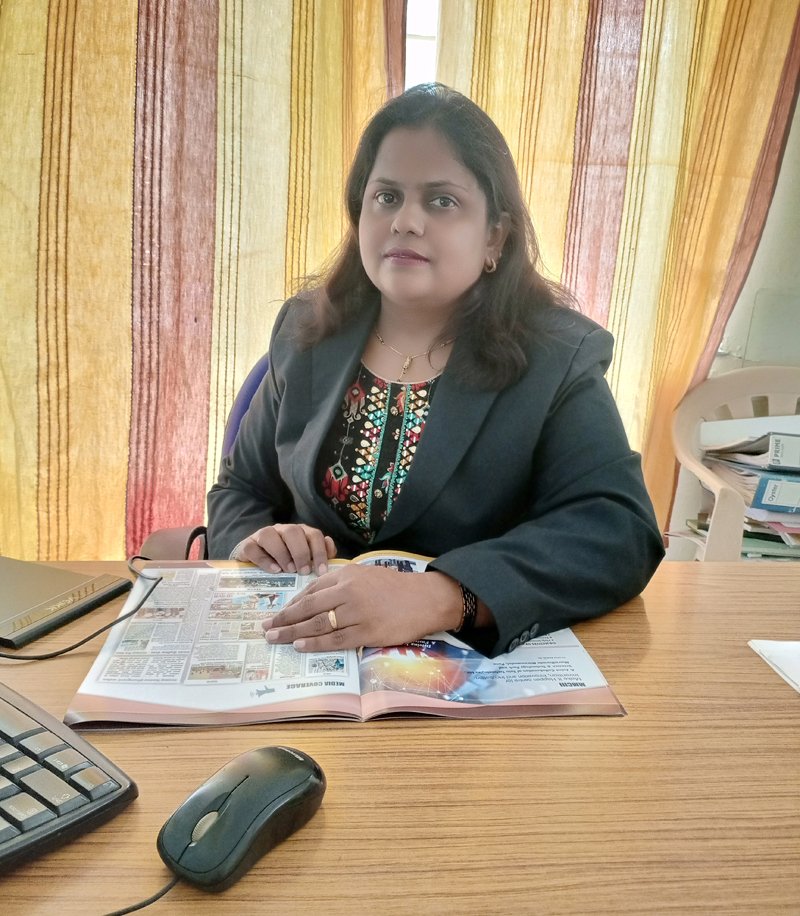
Prof. Dr. Anjali J. Joshi
Head of the Department
Department of Mechanical Engineering has started in 2008. Mechanical Engineering is a core branch of engineering. It deals with Design, Development, Testing and Analysis of any system. Mechanical Engineers have the opportunity to work in each kind of industry including software.
Department of Mechanical Engineering at MMIT works on the principle of overall development of student. We work on the following four pillars for the 360 – degree development of the student.
- Technical knowledge
- Industrial exposure
- Hard and soft skill development
- Social quotient
- Technical knowledge
- Industrial exposure
- Hard and soft skill development
- Social quotient
We have well qualified and experienced teaching and non-teaching staff. The average experience of the staff is around 10 years. Einstein has said that “It is the supreme art of the teacher to awaken joy in creative expression and knowledge” and we truly believe in it. Our teachers use different teaching method like flipped classrooms, role play, jigsaw, group discussions etc. for enhancing the teaching –learning process.
We have 16 well equipped laboratories to understand the practical working of mechanical systems. We also have a workshop with all essential machines including CNC Machine. Student and faculties of mechanical engineering have developed a Project Lab. We have high end instruments like Universal Testing Machine, Accelerometer, Turbines, petrol and diesel engines etc. Department is also equipped withtwo computer labs (80 computers). These labs are used for learning mechanical softwares like AutoCAD, CATIA V5&V6, MATLAB, ANSYS, Master CAM and Automation Studio.
Department have different student chapters like SAE student Chapter, IEI Student Chapter, ASHRAE Student Chapter and ISTE student chapter. Students participate in the national events like BAHA, Go-kart, ROBOCON, etc. Students also organize different competition under these chapters. These chapters help students to develop their skills. Department also have different students clubs like MESA, Debate Club, Roboclub, Read a Book Club, cultural club and placement cell. These clubs give students an opportunity to express themselves and will also help in developing their soft skill.
We have a very strong industry liaisoning and MoUs with various industries and organizations. Department always arranges industrial visits in each semester. Students are encouraged to do the industrial projects and internships. All faculties undergo industrial training regularly and works on the industrial projects.
We are also part of MakeItHappen Center for Invention, Innovation and Incubation (MCIII) which is a Joint collaboration of TATA Technolgies Ltd, Science and Technlogy Park and Marathwada Mitra Mandal, Pune.
We conducts different programs like tree plantation, blood donation, empowering surrounding poor students through NSS and other Social activities.
VISION
To develop skilled and quality mechanical engineering professionals for catering technical and societal needs
MISSION
- Providing quality technical education by strengthening teaching pedagogy
- Enhancing technical skills through industry institute interaction
- Inculcating self-learning attitude and environmental awareness
- Imbibing entrepreneurship and leadership through active participative learning
Program Educational Objectives: (PEOs)
-
Engineering Graduates will be able to:
PEO1: To apply knowledge of mechanical engineering to analyze and find viable solutions to technical problems in allied fields - PEO2: To design and develop engineering system components
- PEO3: To enhance employability and professional careers through entrepreneurship to meet societal needs.
Program Outcomes (POs)
-
PO1 – Engineering Knowledge: Students will be able to apply knowledge of mathematics, natural science, computing, engineering fundamentals, and engineering specialization to develop solutions for complex engineering problems. -
PO2 – Problem Analysis: Students will be able to identify, formulate, review research literature, and analyze complex engineering problems to reach substantiated conclusions with consideration for sustainable development. -
PO3 – Design/Development of Solutions: Students will be able to design creative solutions for complex engineering problems and develop systems, components, or processes considering public health, safety, society, culture, environment, and sustainability. -
PO4 – Conduct Investigations of Complex Problems: Students will be able to conduct investigations of complex engineering problems using research-based knowledge, experiments, modelling, analysis, and interpretation of data to provide valid conclusions. -
PO5 – Engineering Tool Usage: Students will be able to create, select, and apply appropriate techniques, resources, and modern engineering and IT tools, including prediction and modelling, while understanding their limitations. -
PO6 – The Engineer and The World: Students will be able to analyze and evaluate societal, environmental, economic, health, safety, legal, and cultural aspects while solving complex engineering problems for sustainable development. -
PO7 – Ethics: Students will be able to apply ethical principles, professional ethics, human values, diversity, inclusion, and adhere to national and international laws in engineering practice. -
PO8 – Individual and Collaborative Team Work: Students will be able to function effectively as an individual and as a member or leader in diverse and multidisciplinary teams. -
PO9 – Communication: Students will be able to communicate effectively and inclusively with the engineering community and society through reports, design documentation, and effective presentations considering cultural and language differences. -
PO10 – Project Management and Finance: Students will be able to apply engineering management principles and economic decision-making in individual work, teamwork, and multidisciplinary project management. -
PO11 – Life-Long Learning: Students will be able to recognize the need for independent and life-long learning, adapt to emerging technologies, and apply critical thinking in the context of technological change.
Programme Specific Outcomes (PSOs)
-
PSO1: Graduates will be able to apply the knowledge of Mechanical Design, Thermal, and Manufacturing Processes to meet the needs of industry -
PSO2: Graduates will be able to implement the aids of CAD/CAM/CAE and programming tools for the interdisciplinary industry needs